Finishes Restored to Reflective Clarity
Scratch & Swirl Removal in Newburg for paint affected by automated car washes or improper drying techniques
Swirl marks appear as fine circular scratches visible under direct sunlight or dealership showroom lighting, created when dirty wash mitts, automated brush systems, or improper drying towels drag abrasive particles across clear coat during routine cleaning. Light surface scratches accumulate from environmental exposure, contact with clothing or bags, and repeated washing over months and years of vehicle use. Professional polishing minimizes these paint imperfections through controlled abrasion that levels the clear coat around each scratch, restoring gloss and improving light reflection across treated panels. Armani's Limo Services and Mobile Detailing evaluates luxury vehicles, daily drivers, SUVs, trucks, and collector automobiles throughout Newburg and the Tri-state area to determine the correction process appropriate for each paint condition, age, and clear coat thickness.
Polishing removes microscopic layers of clear coat to reduce the depth of scratches until they no longer diffract light into visible imperfections. The process requires measuring paint thickness before beginning work to avoid removing too much material, and different pad and compound combinations address varying scratch severity without creating new marring.
Request a paint thickness measurement and correction estimate to understand what improvement is achievable for your vehicle's specific finish.
How Polishing Differs from Waxing
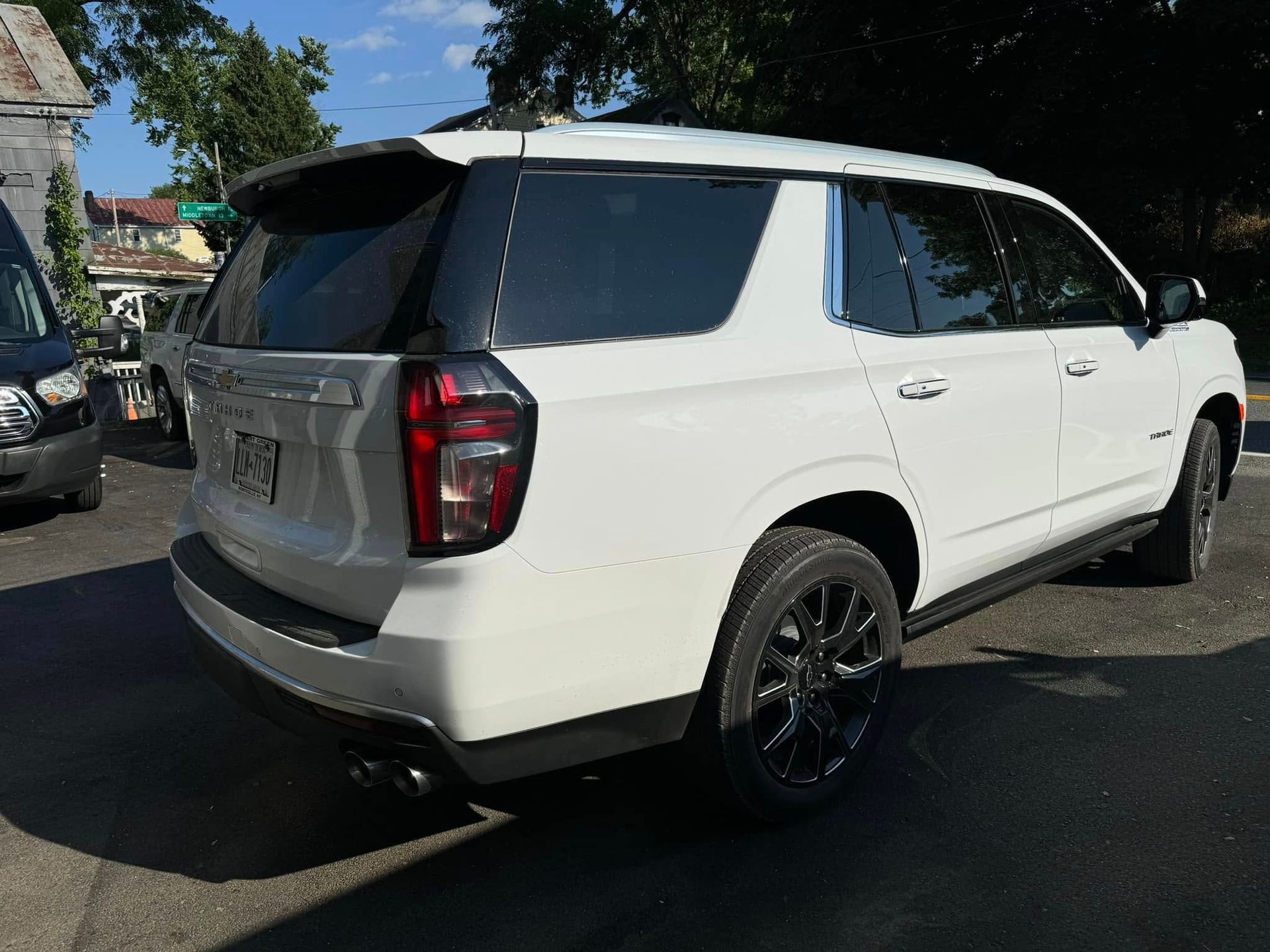
Correction begins with evaluating scratch depth under focused lighting, then selecting polishing compounds and pad combinations that remove enough clear coat to level imperfections without cutting through to the base coat on edges or body lines. Machine polishing works product into paint with controlled speed and pressure, removing defects through cutting action rather than filling them temporarily the way waxes and glazes do.
After correction, you notice paint that reflects light cleanly without the hazy web pattern caused by overlapping swirl marks, and dark-colored vehicles no longer show circular scratches that were previously visible every time sunlight hit the hood or doors. The finish looks deeper and more liquid because light passes through the clear coat and reflects off the base color without being scattered by surface imperfections.
Protecting corrected paint with ceramic coating or high-quality sealant maintains the improved clarity by preventing new scratches from forming during washing and daily use. Without protection, paint remains vulnerable to the same washing techniques and environmental contact that created the original swirls, meaning the correction work degrades over time as new defects accumulate.
Answers About Paint Correction
Owners of vehicles with visibly marred paint want to know what polishing removes, how much clear coat remains afterward, and whether results justify the cost compared to simply repainting panels.
What causes swirl marks to appear so quickly after washing?
Automated car washes use rotating brushes that trap dirt and sand, dragging those particles across paint with enough pressure to create thousands of fine scratches in a single wash cycle, and those scratches become visible on dark colors immediately.
How much clear coat gets removed during correction?
Single-stage polishing typically removes one to two microns of clear coat to address light swirls, while multi-stage correction for deeper scratches may remove three to five microns, always staying well below the original clear coat thickness of 40 to 60 microns on most factory paint.
When should paint correction be avoided?
Vehicles with heavily oxidized paint, clear coat that has already been polished multiple times, or panels showing clear coat failure require repainting rather than correction, and a paint thickness gauge reveals whether enough material remains for safe polishing.
What scratches cannot be polished out?
Deep scratches that penetrate through clear coat into base color or primer require touch-up paint or panel refinishing, as polishing only levels clear coat and cannot replace missing material or restore color layers.
Can correction be performed on vehicles in the Newburg area during winter months?
Polishing generates heat that requires adequate ventilation and controlled temperatures to prevent product drying too quickly or clear coat becoming too soft, making enclosed workspace necessary during cold weather or when humidity levels drop below ideal ranges.
Armani's Limo Services and Mobile Detailing brings professional paint inspection and correction directly to your location, evaluating each vehicle individually to recommend the polishing approach that balances defect removal with clear coat preservation. Combine scratch removal with ceramic coating to protect your newly corrected finish from the washing damage and environmental contact that created the original imperfections.