
Lenses Cleared for Maximum Light Output
Headlight Restoration in Newburg for vehicles with cloudy or yellowed lenses that reduce nighttime visibility
Headlight lenses are made from polycarbonate plastic that oxidizes when exposed to UV light, heat, and environmental contaminants over time. The oxidation creates a cloudy or yellowed layer on the outer surface that blocks light output and reduces visibility during night driving or poor weather conditions. Armani's Limo Services and Mobile Detailing restores headlight clarity in Newburg and the Tri-state area for cars, trucks, SUVs, vans, and commercial vehicles where lens degradation has progressed beyond what standard cleaning can address. The restoration process removes the oxidized layer through sanding and polishing, then applies a protective treatment to slow future degradation.
Restoration begins with wet sanding using progressively finer grits to remove the damaged outer layer of plastic. Coarse grits strip away heavy oxidation and surface pitting, while finer grits smooth out the sanding marks left by earlier stages. Once the oxidized layer is removed, polishing compounds are applied with a buffing pad to restore optical clarity and eliminate haze. A UV-resistant sealant is applied as the final step to protect the newly exposed plastic from immediate re-oxidation, extending the time before cloudiness returns.
Schedule headlight restoration to improve visibility and eliminate the need for lens replacement.
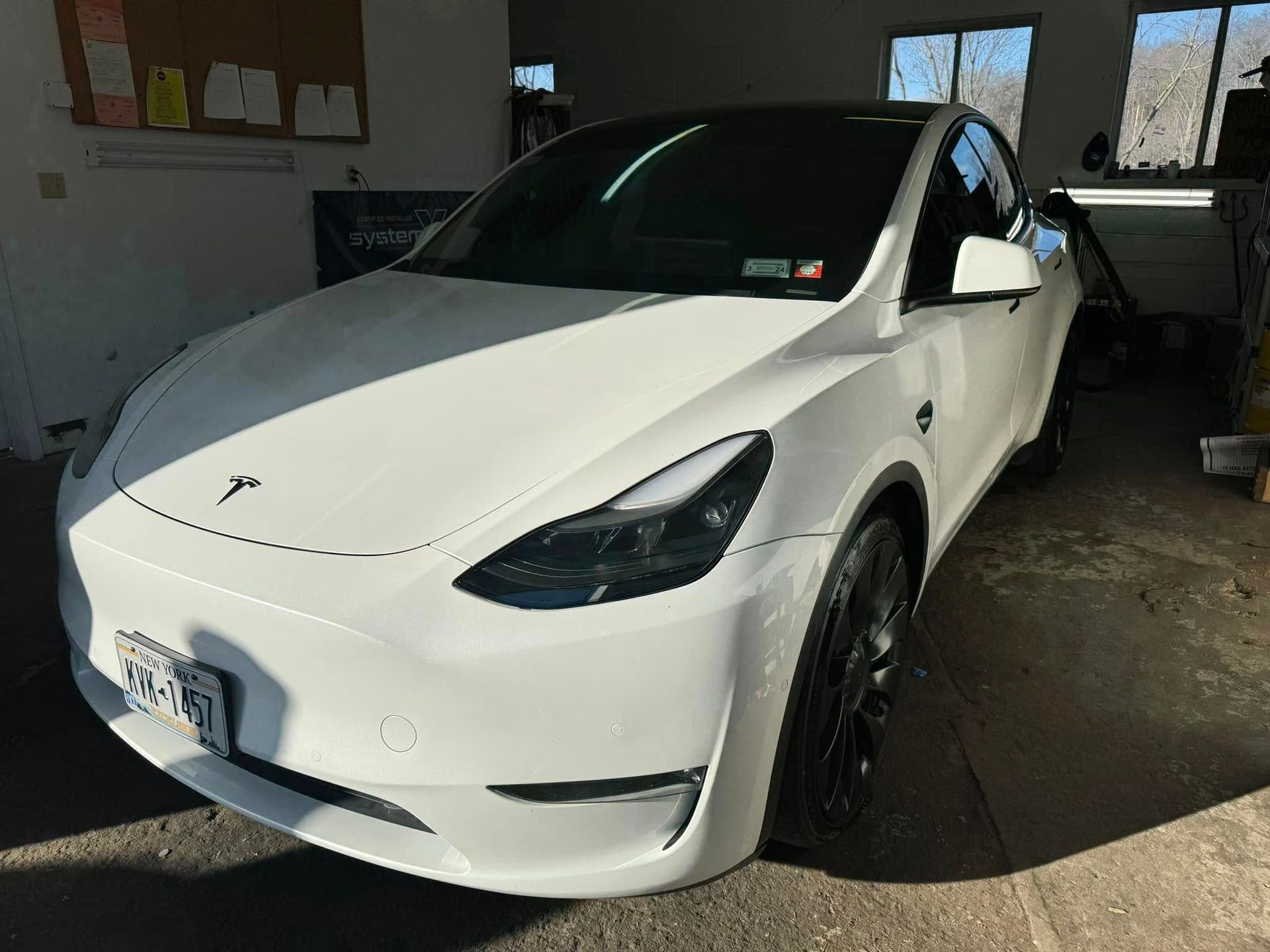
What Proper Restoration Requires
Headlight restoration requires removing enough material to reach undamaged plastic while maintaining the lens contour and thickness. Sanding too aggressively creates flat spots or uneven surfaces that distort the light beam pattern, while insufficient sanding leaves oxidation residue that reappears quickly. Each sanding stage must cover the entire lens uniformly to avoid creating steps or transitions between treated and untreated areas. Polishing must remove all sanding marks to achieve optical clarity, as any remaining scratches will diffract light and reduce output.
After restoration is complete, headlight lenses appear clear with no yellow or brown tint, and light output is noticeably brighter when tested against a wall or roadway. The lens surface feels smooth rather than rough or pitted, and light projects in a defined beam pattern without diffusion or scatter. The cosmetic improvement is immediate, with headlights matching the vehicle's overall appearance rather than standing out as aged or neglected components. The restored lenses extend the life of existing assemblies, eliminating the expense of purchasing and installing new headlight units.
Restoration works only on lenses with surface oxidation, not on lenses with internal moisture, cracks, or structural damage. The protective sealant applied after polishing degrades over time and requires reapplication every one to two years to maintain clarity. Lenses that have been sanded and polished multiple times may reach a thickness where further restoration is not possible without compromising structural integrity or optical performance.
Common Questions About This Service
These questions address how headlight restoration improves safety and appearance while avoiding unnecessary replacement costs.
What causes headlight lenses to turn yellow or cloudy over time?
UV radiation from sunlight breaks down the polycarbonate plastic's molecular structure, while heat from the bulb accelerates degradation from the inside, and road chemicals and debris abrade the outer surface, all combining to create the oxidized layer that appears yellow or cloudy.
How does wet sanding differ from dry sanding when restoring headlight lenses?
Wet sanding uses water to flush away plastic particles and prevent clogging the sandpaper, which maintains consistent abrasion and reduces heat buildup that can warp the lens or create uneven surfaces.
Why do some restored headlights become cloudy again within months?
Lenses that are sanded and polished but not sealed lack UV protection on the newly exposed plastic, allowing oxidation to restart immediately and progress rapidly because the outer protective coating originally applied at the factory has been removed.
When should headlight restoration be scheduled for vehicles in the Tri-state area?
Scheduling before winter improves visibility during months with reduced daylight and harsh weather, while scheduling in spring addresses oxidation that accelerated during summer's intense UV exposure and prepares lenses for the upcoming season.
What types of vehicles see the greatest safety improvement from headlight restoration?
Vehicles driven frequently at night, vehicles with high-intensity discharge or halogen bulbs where output is already limited, and older vehicles where lens degradation has progressed to the point of affecting beam pattern all benefit immediately from restored clarity and light output.
Armani's Limo Services and Mobile Detailing completes headlight restoration at your location, bringing all sanding and polishing equipment to your home or office. Book an appointment to restore lens clarity and improve visibility without replacing headlight assemblies.